


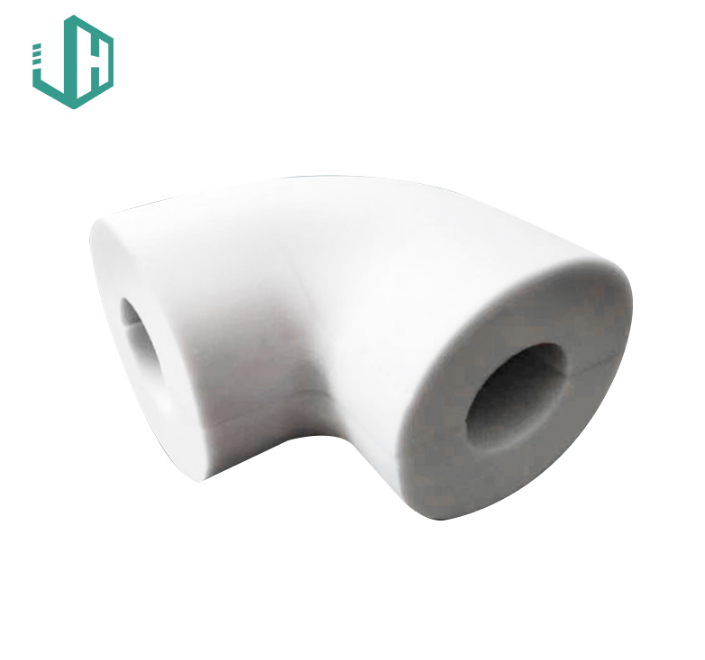
When it comes to keeping things warm or cold, not all insulation materials are created equal. You might have noticed that some foams feel cool to the touch while others barely let any heat through. Among the many options out there in the insulation world, melamine foam insulation stands out with a thermal conductivity value that consistently beats polyurethane, mineral wool, and fiberglass. Most melamine foams register somewhere between 0.032 and 0.038 W/m·K, while standard polyurethane foams typically range from 0.020 to 0.030 W/m·K for closed-cell varieties and mineral wool sits around 0.035 to 0.045 W/m·K. So what is actually going on inside this lightweight, almost sponge-like material that makes heat have such a hard time getting through? Let us break it down in plain language.
The Secret Lies in That Open Cell Architecture
The story starts with the structure of the material itself. Melamine foam has something called an open cell structure, but what really matters is just how open it is. The opening rate reaches over 99%, forming a three-dimensional grid-like network that looks a bit like a microscopic honeycomb gone wild. Think of it as a maze made of super thin resin strands with countless tiny compartments filled with nothing but still air.
Now here is the clever part. Air trapped inside those tiny cells cannot really move around much. Heat usually travels through fluids like air by convection, meaning warm air rises and cold air sinks, creating a circulation loop that transfers energy. But when air gets locked into cells so small that it cannot form any meaningful convection currents, it effectively becomes one of the best natural insulators out there. The three-dimensional grid structure effectively blocks convective heat transfer, leaving conduction through still air as the main pathway, and still air happens to have a thermal conductivity of only about 0.026 W/m·K. When you fill more than 99% of a material with something that naturally resists heat flow, the end result is bound to perform well.
Compared to closed-cell foams like certain polyurethane types, which rely on trapped blowing agents with low thermal conductivity, melamine foam takes a different approach. The open cell design means air flows freely in and out during compression, but when the material sits undisturbed as insulation, that same structure becomes a thermal barrier. The sheer volume of trapped air, combined with the impossibility of forming convection loops in such tiny spaces, creates a powerful resistance to heat transfer.
Thin Struts and the Long Path for Solid Conduction
Heat does not just travel through air. It also travels through the solid framework of any foam material through what engineers call solid conduction. In melamine foam, the solid skeleton consists of very thin resin struts that form the edges of each cell. Because these struts are so slender and because the density of the foam is incredibly low, typically around 6 to 12 kilograms per cubic meter, there just is not that much solid material for heat to travel through.
Every time heat tries to make its way through the solid part of the foam, it has to trace a winding path along those delicate cell walls. The journey is long, tortuous, and inefficient, which naturally slows down solid phase heat conduction. The thermal characterization of these foams shows that at atmospheric pressure, total thermal conductivity sits around 33 to 34 mW/m·K, while under vacuum conditions where gas conduction is eliminated, it drops dramatically to just 6 to 7 mW/m·K. That big gap tells you something important. It indicates that gas conduction through the trapped air dominates the heat transfer process, but the solid framework also plays a supporting role in keeping overall conductivity low by minimizing the solid pathway.
When you compare this with higher density insulation materials like rigid polyurethane foams, which pack more solid mass into the same volume, the advantage of melamine foam insulation becomes clearer. A denser material offers a more direct highway for heat to travel through the solid phase. Melamine foam deliberately makes that highway as narrow and winding as possible.
Chemical Structure Brings Thermal Stability to the Table
Beyond the physical structure, the chemical identity of melamine resin itself deserves some credit. Melamine foam is a thermosetting polymer with a backbone built around the triazine ring, and this molecular feature contributes significantly to thermal stability. Thermosetting materials, once cured, do not soften or melt when heated, unlike thermoplastics that can deform at elevated temperatures.
The triazine ring in the melamine molecule is thermally stable and enhances the rigidity of the polymer network, which suppresses molecular thermal motion. In simpler terms, the molecules themselves do not wiggle around as much when things heat up, and that means less energy gets passed along from one molecule to the next. This inherent chemical stability allows melamine foam to maintain consistent physical properties across a remarkably wide temperature range, from cryogenic conditions as low as minus 180 degrees Celsius all the way up to around 200 degrees Celsius for long-term use.
That broad temperature window is not just a nice bonus. It means the thermal conductivity stays relatively stable even when the surrounding environment changes dramatically, which is not always true for other foam types that might see their performance degrade at extreme temperatures. Polyurethane foams, for instance, tend to have a much narrower effective range before their physical properties start to shift, typically maxing out between 80 and 120 degrees Celsius.
No Water Absorption Means Consistent Performance
There is another factor that often gets overlooked when people compare insulation materials, and that is moisture resistance. Many traditional insulation materials, fiberglass and mineral wool in particular, tend to absorb moisture from the air over time. When that happens, water fills the air pockets, and water conducts heat about 25 times better than air. So what started as decent insulation gradually loses its effectiveness as humidity takes its toll.
Melamine foam behaves differently in this regard. Its thermal insulation properties are derived from the three-dimensional grid structure filled with still air, and the material naturally resists significant water absorption. Some advanced formulations achieve a volume water absorption rate below 1%, meaning the foam does not become waterlogged under normal service conditions. This makes a huge difference in real-world applications where humidity, condensation, or occasional water exposure might otherwise compromise thermal performance over the long haul.
For industrial pipe insulation, HVAC ductwork in humid climates, or building envelopes exposed to weather, this moisture resistance means the low thermal conductivity you specified at installation day is still there years later. It also means melamine foam insulation remains effective in environments where other materials would need replacement or would require an additional vapor barrier, adding cost and complexity.
Where This Low Conductivity Really Shines
All these technical details are interesting, but what does it actually mean for the people designing buildings, vehicles, or industrial equipment? The practical advantages of melamine foam insulation show up across a wide range of real-world scenarios.
In heating, ventilation, and air conditioning systems, melamine foam prevents convective air movement while simultaneously reducing thermal losses through duct walls, so the energy put into heating or cooling actually reaches its intended destination rather than escaping along the way. For industrial applications, melamine foam can handle temperatures as high as 240 degrees Celsius intermittently and down to minus 180 degrees Celsius for cryogenic service, making it suitable for everything from steam pipes to liquefied natural gas storage.
The automotive and aerospace industries particularly value this material because combining low thermal conductivity with extremely light weight solves two problems at once. When every kilogram matters for fuel efficiency, getting effective thermal management without adding significant mass is a genuine competitive advantage. In vehicle engine compartments, melamine foam serves as both a thermal shield and a sound absorber simultaneously, protecting sensitive components from radiant heat while keeping engine noise under control.
Compared to fiberglass and mineral wool, melamine foam insulation performs well in terms of thermal resistance without the irritation concerns that come with fibrous materials. Fibrous insulation can release particles into the air and requires protective equipment during installation, whereas melamine foam is fiber-free and safe to handle, which simplifies maintenance and replacement work on industrial sites.
When you look at the big picture, melamine foam insulation achieves its lower thermal conductivity through a combination of factors that work together. The ultra-high open cell ratio traps vast amounts of still air, which is itself a poor conductor. The thin, sparse solid framework minimizes the heat path through the material. The thermosetting chemical structure resists molecular motion that would otherwise transfer energy. All these mechanisms reinforce each other, and the result is an insulation material that genuinely outperforms many traditional alternatives in demanding thermal management applications.
If the project involves high temperatures, humidity exposure, weight constraints, or a need for insulation that also handles sound, melamine foam insulation is worth a close look. Understanding the science behind the numbers makes the choice a lot clearer.