


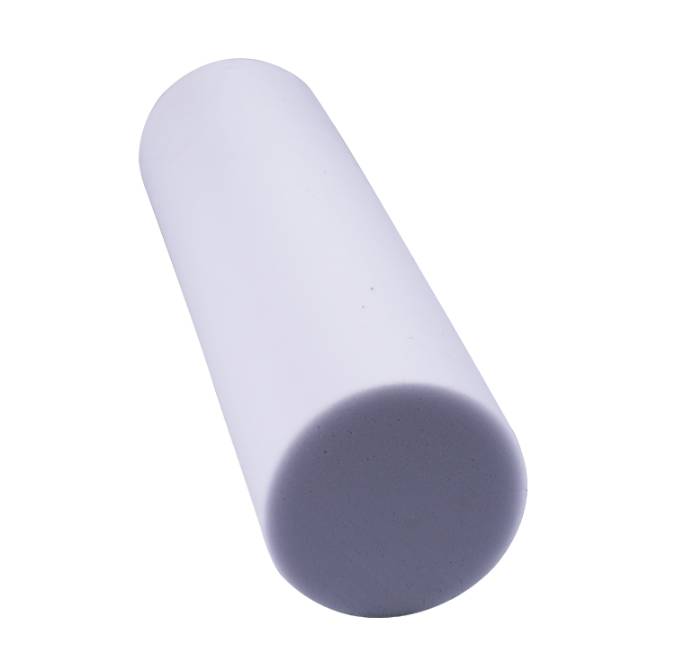
Ever thought about how one material could work in both your kitchen cleaning supplies and inside high-end commercial sound recording studios? On one hand, a white foam block could be scrubbing crayon off walls and on another used to reduce echoes inside sound booths or compartments on a high speed train. The common thread in both situations is melamine foam. Its microstructure is highly tuned to achieve both of these everyday marvels.
There is no other multi‑function foam material that is more interesting or versatile. Its construction doesn’t base its sound and cleaning abilities on fancy coatings, chemical composites, layered construction or other wacky materials. It is cheap, versatile, and plentiful for a reason. The structure of the resin itself and the open cells is what gives the material its useful properties. With a simple comprehension of the microstructure, the dual personality of the foam becomes clearly understood.
The Open-Cell Structure Behind All Its Capabilities
During production, a melamine resin, when foamed, creates a network of three‑dimensional, interconnected struts and cavities. This results in a material that is not simply a solid block of sealed air bubbles, but instead is a rigid microscopic sponge. A three‑dimensional labyrinth of passageways runs through the entire material, and the open‑cell rate can reach over 99%.
This base structure allows the material to both absorb sound and enable cleaning. In a cleaning sponge, those interconnected cavities act like a fine network for separating and dispersing soiled materials. The melamine resin itself cures to a hardness similar to quartz, which keeps the cavity walls rigid and prevents deformation. When a damp sponge is rubbed across a dirty surface, the hard‑tipped struts act as countless tiny scrapers. They dig into surface grooves and pits, lifting out deeply embedded dirt. At the same time, the open pores wick the loosened debris and water into the interior of the foam, trapping the mess away from the surface being cleaned. No chemical reaction is needed to assist; this purely mechanical scrubbing paired with capillary wicking delivers remarkably thorough dirt removal.
With that same open‑cell structure, melamine foam absorbs sound waves instead of simply blocking them. That makes it fundamentally different from foams that only reflect sound. Acoustic waves penetrate the open pores and cause air molecules inside to vibrate. As the sound waves flow freely through the evenly distributed pore network, the vibrating air collides with the rigid walls, generating friction that converts acoustic energy into negligible amounts of heat. Many materials just repel sound; melamine foam absorbs it.
Why the Cleaning Action Feels Like Magic but Is Pure Physics
The sense of magic quickly fades once users realize the cleaning power relies solely on physics. People are drawn in by the plain white appearance of the foam, but it takes a simple action, like adding water, to fully unlock the cleaning process. Wetting the sponge leads to a dramatic increase in cleaning performance, to the point where scuff marks or soap scum seemingly vanish from a surface in moments. It feels like magic, but every step is governed by the laws of physics.
The cleaning method uses two actions that happen simultaneously. The first is micro‑abrasion. Each narrow strut of the foam network is hard enough to scrape against dirt particles trapped in surface imperfections. Because the struts are extremely thin, they can enter narrow grooves and microscopic pits that are unreachable by ordinary cloths and sponges. The second action is capillary wicking. The open‑cell structure draws in water and loosened dirt through interconnected channels and then entraps the grime inside the foam, well away from the newly cleaned surface. The water in the system also helps soften the struts just enough to minimize scratching and helps transport the loosened dirt out of the surface. No soaps, detergents, or solvents are needed.
Thanks to this purely physical approach, the material has earned a firm place in homes everywhere. Grease particles on a stovetop are scraped off one by one. Soap scum on shower glass is sanded away at a scale invisible to the eye. Stubborn marks on painted walls can be removed without a single chemical. The foam wears down with use, much like a pencil eraser, gradually getting smaller. The fragments that break away carry the dirt with them and rinse harmlessly down the drain, leaving nothing but a clean surface behind.
Turning Internal Structure into Acoustic Performance
When the application shifts from cleaning to acoustics, the exact same structure delivers entirely different results. The open‑cell network that wicks water in a cleaning sponge becomes a highly effective sound trap when used in panels and insulation.
Sound absorption performance is typically evaluated using the Noise Reduction Coefficient, commonly abbreviated as NRC. Values closer to 1.0 mean the material absorbs more sound energy rather than reflecting it. High‑quality melamine foam consistently scores near the high end of the scale, reaching NRC values between 0.8 and 0.95 depending on thickness and density. A 50‑millimeter‑thick panel can achieve an NRC of 0.85 or higher, which means it absorbs the majority of sound energy across a wide range of frequencies.
Melamine foam performs especially well at medium and high frequencies, the very ranges where human speech and most common noise sources live. This makes it ideal for spaces where speech intelligibility is crucial, such as classrooms, auditoriums, and public gathering venues where controlling reverberation matters.
Another major benefit for acoustic installations is the material's lightweight quality. With densities typically ranging from only 8 to 11 kilograms per cubic meter, melamine foam is far easier to handle and mount than traditional acoustic materials. In transportation applications like high‑speed train cabins and automotive interiors, any weight saved translates directly into lower energy consumption. The combination of high sound absorption and low mass is genuinely remarkable.
Inherent Flame Resistance and Safety Benefits
Beyond cleaning and acoustics, there is another characteristic that makes this foam highly appealing for all types of applications, whether residential or industrial. The material is inherently flame resistant without any need for chemical additives.
The melamine resin used in the foam is naturally flame retardant due to its high nitrogen content. When exposed to fire, the foam will not melt or drip flaming droplets. Instead, it chars on the surface and self‑extinguishes once the flame source is removed. This fire‑safe behavior is permanent; it cannot wash out or degrade over time, unlike chemically treated materials where fire retardants can gradually leach away.
Standard grades are UL94 V‑0 rated and meet B1 classifications under many building codes. This allows the foam to be safely installed in public buildings, transportation vehicles, and industrial equipment where fire codes are especially strict. The material also exhibits low smoke density and does not produce flaming droplets during combustion. The fire protection is built right into the resin chemistry, eliminating the need for additional flame‑retardant chemicals and remaining effective for the entire life of the foam.
From Ultra Cold to Ultra Hot Without Losing Performance
Very few materials can claim to perform consistently from deep‑freeze cold all the way to oven‑level heat, but melamine foam handles both extremes comfortably. The working temperature range spans roughly from minus 200 degrees Celsius to 200 degrees Celsius or even higher, allowing the foam to be used in applications that would destroy most other polymer foams.
At ultra‑low temperatures, the foam remains flexible and does not become brittle or shatter. This makes it excellent for cryogenic insulation on pipes and storage vessels. At the high‑temperature end of the range, the foam maintains impressive dimensional stability and will not soften or melt the way most thermoplastics do. These thermal properties lead to reliable use on steam pipes, HVAC ductwork, and industrial systems that experience extreme temperature swings.
Every consumer can appreciate how temperature tolerance translates into real‑world durability. Cleaning sponges withstand hot water without degrading. Acoustic panels mounted near engines or machinery remain stable. Insulation layers inside appliances and electronics stay consistent across seasonal temperature changes. The material simply keeps working in conditions that would push many alternatives past their limits.
From Studio Walls to Kitchen Drawers
It is worth pausing for a moment to consider how this material shows up in a surprisingly wide range of settings. Sometimes the construction and processing are tweaked for different purposes, and the connections are easy to miss.
In professional recording studios, acoustic panels made from melamine foam are used to manage reflections and create a tightly controlled sound environment for clean recordings. On high‑speed trains, the foam serves as both thermal insulation and noise‑reducing material, shielding passengers from wheel noise and outside weather. In automotive engine compartments, it suppresses mechanical noise while withstanding high temperatures that would quickly degrade standard polyurethane foams. In industrial settings, the foam is wrapped around loud machinery to bring workplace noise down to safer levels.
At home, this very same material sits quietly in a drawer or under the sink, ready to pamper surfaces without the hassle of chemical cleaners. Popular household uses include removing shower scum, wiping crayon off walls, erasing scuff marks from sneakers, degreasing stovetops, and tackling all sorts of stubborn marks. Every scuff and stain that vanishes is a tiny demonstration of mechanical cleaning physics in action.
Having a dual identity that spans from heavy engineering to everyday housework is rare among materials. Most products find one thing they do exceptionally well and stay in that lane. Melamine foam crosses the boundary with ease because both cleaning and sound absorption boil down to physical problems that an open‑cell hard foam solves beautifully. Dirt needs to be scraped out of microscopic pits and carried away; sound energy needs to be captured and dissipated as heat. Both processes rely on the same structural features: interconnected open pores for transport, and rigid struts for interacting with the outside world.
Very few materials can genuinely claim to feel equally at home in a recording studio and a kitchen drawer. The thread that ties everything together lies beneath the surface in the internal architecture: a complex network of hard, lightweight resin that is safe, flame retardant, thermally stable, and capable of handling nearly anything you throw at it. That is what gives this family of materials its unique ability to tackle challenges as different as persistent stains and unwanted noise.
Table of Contents
- The Open-Cell Structure Behind All Its Capabilities
- Why the Cleaning Action Feels Like Magic but Is Pure Physics
- Turning Internal Structure into Acoustic Performance
- Inherent Flame Resistance and Safety Benefits
- From Ultra Cold to Ultra Hot Without Losing Performance
- From Studio Walls to Kitchen Drawers