


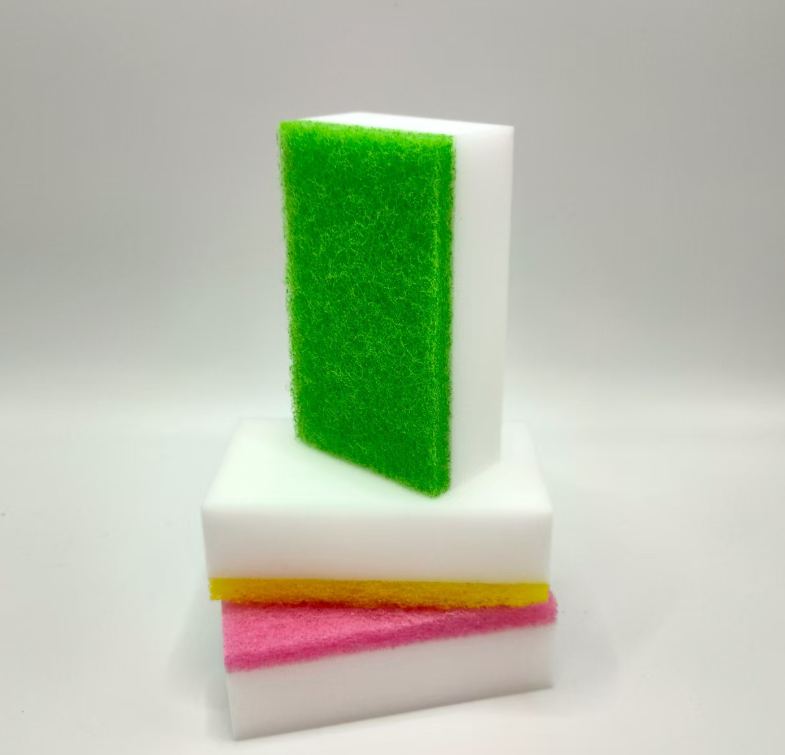
You have probably been in this situation before. A scuff mark on the white wall stares back at you, the bathroom sink has a stubborn ring of soap scum, or your favorite white sneakers have picked up some mysterious dark streaks. You reach for a spray bottle full of some harsh-smelling cleaner and brace yourself for the fumes and the scrubbing. But what if all you really needed was a plain white sponge and a splash of water?
That little white block often referred to as magic sponges has completely changed how people think about household cleaning. It does not rely on any chemical reaction to break down grime. Instead it uses something much simpler and far more elegant: pure physics. The secret lies in its unique material structure, and once you understand it, you will probably never look at a sponge the same way again.
What exactly is melamine foam made of
To understand why this material works so well, you first need to know what it actually is. Melamine foam begins its life as a thermoset resin, created by combining melamine and formaldehyde through a high-temperature polymerization process. The end result is a rigid, three-dimensional network of interlocking polymer chains with an open-cell structure.
This is where the magic starts. During manufacturing the foam is processed to create millions upon millions of tiny interconnected bubble holes throughout the material. Each of these microscopic cavities connects to others around it, forming something like a miniature honeycomb maze. The final material ends up incredibly lightweight and feels soft to the touch, but do not let that fool you. On a microscopic level the skeleton of this foam is surprisingly hard. In fact the melamine resin used in its production is nearly as hard as glass once cured. This combination of being soft to the touch but hard at the microscopic level is what makes the whole cleaning mechanism possible.
The power of the microscopic structure
If you were to put a melamine foam sponge under a powerful electron microscope, you would see something that looks a bit like a rigid three-dimensional spider web made of sharp-edged threads. These threads form the walls of countless tiny open chambers. Each bubble hole within the structure connects to at least three other holes or has multiple destructible surfaces, and most of the bubble prongs are shared by at least three structural units at once.
This complex internal architecture is not just for show. When the sponge is dry, all these tiny cavities sit empty and the material feels quite firm. But the moment water touches the surface, something interesting happens. The open-cell structure acts like a network of capillary tubes, pulling water deep into every corner of the foam body. The water does not just sit on the surface; it travels deep into the interior, filling those microscopic chambers and making the material soft and flexible.
Once damp the sponge is ready to work. The real cleaning mechanism combines two distinct physical actions happening at the same time.
The first action is all about abrasion. The struts of the melamine foam network, even though they feel soft to your fingertips, are actually microscopic cutting edges at the bacterial scale. As you rub the damp sponge across a stained surface, these tiny rigid strands catch on the particles of dirt, grease, and grime lodged in the surface grooves. They scrape and lift these contaminants away from the substrate, working in much the same way that extremely fine sandpaper would. The difference is that this abrasive action is so fine and so gentle that it does not scratch most hard surfaces. The strands are small enough to fit into the tiniest pits and grooves of whatever surface you are cleaning, targeting only the dirt without damaging the material underneath.
The second action is absorption. While the abrasive strands are busy scraping dirt loose, the capillary network of the foam is simultaneously pulling the dislodged particles into its open cavities. Water mixed with the loosened grime gets sucked into the sponge body through those interconnected channels, effectively trapping the mess inside the foam rather than spreading it around the surface. The combination of these two physical processes means that dirt gets mechanically lifted first and then immediately captured and held, all without a single chemical reaction taking place.
Why no chemicals are needed to remove tough stains
Most household cleaners work through chemistry. A degreaser uses surfactants to break the bond between oil and the surface. A bleach product uses oxidation to change the chemical structure of a stain molecule so it becomes invisible. An acid-based cleaner dissolves mineral deposits through a chemical reaction. All of these approaches consume chemical energy and often produce fumes or residues in the process.
Magic sponges take a completely different approach, one rooted entirely in physics. There is no surfactant breaking down grease molecules, no bleaching agent whitening the stain, and no acid dissolving anything. The foam simply scrapes the dirt off mechanically and then wicks it away into its internal pore network.
This is why only water is needed. Water does not act as a cleaning agent here. It serves as a lubricant that softens the foam fibers and helps carry away the loosened debris. The actual removal of the stain is done by those microscopic rigid strands physically grabbing and pulling the dirt particles up and out of the surface imperfections they are stuck in.
The stain removal process for magic sponges relies on this purely mechanical action from beginning to end. Grease on a stovetop gets scraped off particle by particle. Soap scum on shower glass gets sanded away at a scale too fine for the human eye to detect. Crayon marks on painted walls get lifted out of the paint texture by those tiny abrasive fingers. None of these outcomes requires any chemical transformation of the stain itself. The dirt is physically removed in the same way that rubbing an old-fashioned pencil eraser lifts graphite off paper.
Everyday surfaces where magic sponges work best
Because the cleaning action is purely physical and relatively gentle, these sponges can be used across a surprisingly wide range of household surfaces. Hard, non-porous materials tend to respond best since the foam can get right into the surface texture without being absorbed or snagged.
Walls and painted surfaces are one of the most common application areas. Scuff marks from shoes, crayon artwork from creative toddlers, and those mysterious dark smudges that appear around light switches all come off remarkably easily with a damp melamine foam sponge. Just be mindful to use a light touch on delicate paint finishes, as overly aggressive scrubbing can gradually wear through the surface layer.
In the bathroom, the sponges really show what they are capable of. Soap scum that builds up on glass shower doors, mineral deposits around faucet bases, and the grimy film that collects on bathtub surfaces all yield to a few gentle passes. The micro-abrasive structure digs into those stubborn deposits and lifts them away without scratching porcelain, ceramic, or glass.
Kitchen surfaces also benefit tremendously. Set-in grease around stovetop burners, coffee and tea stains inside mugs, and food residue on countertops can all be tackled without any additional cleaning products. The sponge simply scrapes the buildup away using nothing but water as a lubricant.
Shoes, particularly white sneakers with rubber soles, are another popular target. The sponge can erase scuff marks and ground-in dirt from rubber trim and soles, restoring that fresh-out-of-the-box look with minimal effort. Car interiors, including vinyl panels and leather seats, can also be refreshed using the same approach, though testing on a hidden area first is always the wise move.
Even outdoor items such as patio furniture, plastic garden chairs, and bicycle frames can benefit from a quick pass with a damp melamine sponge. The versatility comes from the fact that physical abrasion works on almost any hard surface as long as the material being cleaned is hard enough to resist being worn down itself.
The eco-friendly side of mechanical cleaning
There is a growing awareness that filling our homes with dozens of chemical cleaning products is not particularly good for our health or the environment. Every spray bottle of window cleaner, every tub of bathroom scrub, and every degreaser under the kitchen sink contains chemicals that eventually go somewhere after they rinse down the drain.
The appeal of magic sponges from an environmental standpoint is straightforward. You replace multiple chemical products with a single physical tool. The sponge itself does not release any cleaning agents into the water. It does not leave behind any chemical residue on the surfaces you have cleaned. The only thing going down the drain is water mixed with whatever dirt and grime were on the surface to begin with.
This also means fewer plastic bottles being manufactured, shipped, and eventually discarded. A single pack of melamine foam sponges can take the place of several different specialized cleaners, reducing the overall consumption of packaging materials. For people with sensitive skin or respiratory issues, the absence of chemical fumes and residues is an added bonus that makes cleaning less of an endurance event.
It is worth noting however that the sponge itself is a consumable tool. As it is used, the abrasive action that makes it so effective also wears the foam down. The sponge gradually gets smaller with each use, much like a pencil eraser, as tiny fragments break away along with the dirt being scrubbed off. These fragments are typically rinsed away and the sponge eventually needs to be replaced. Still, the environmental trade-off of using a physical product compared to using chemical formulations is worth considering for anyone looking to simplify their cleaning routine.
Getting the best results without damaging surfaces
Even though melamine foam is gentle compared to industrial abrasives, it is still an abrasive material and benefits from thoughtful use. A few simple habits can make a big difference in getting great results while protecting your belongings.
Always start by wetting the sponge thoroughly and then squeezing out the excess water. A damp sponge works better than a soaking wet one because the capillary action is more effective when the pores are not already completely saturated. The foam should feel soft and pliable before it touches the surface. Never use the sponge completely dry, as this concentrates the abrasive action too much and can increase the risk of surface dulling.
Test on a small hidden spot before tackling a visible area. This is especially important on painted walls with glossy finishes, polished stone countertops, or high-gloss furniture surfaces. While the sponge is safe for most hard surfaces, some delicate finishes can be dulled by repeated rubbing. A quick test on an inconspicuous corner will tell you everything you need to know about how the surface will respond.
Use light even pressure rather than aggressive scrubbing. The micro-abrasive structure does the heavy lifting, meaning you do not need much force. Let the sponge do its job with gentle consistent strokes, working in one direction rather than scrubbing in circles which can sometimes create uneven wear patterns on delicate finishes.
After cleaning, go over the area with a clean damp cloth to wipe away any fine residue left behind. Because the foam wears down during use, tiny white particles can remain on the surface. A quick wipe-down restores a perfectly clean finish and prevents any chalky residue from drying in place.
Store the sponge somewhere it can dry out between uses. The open-cell structure allows water to evaporate quickly, so the sponge will be dry and ready for next time. This also helps prevent any bacterial growth inside the foam that could occur if it were left constantly wet.
From scuffed walls and greasy stovetops to dingy shoes and cloudy shower glass, the ability to clean with nothing more than water and a simple white sponge feels almost too good to be true. Yet the science behind it is solid. Melamine foam relies on physical abrasion and capillary absorption to lift dirt from surfaces without ever needing a chemical reaction. Understanding this mechanism not only helps you use the product more effectively but also gives you a deeper appreciation for what is really happening in that quiet moment when a stubborn mark simply vanishes under your fingertips.